The Majority New Patriotic Party (NPP) in Parliament has put up a stiff defence of a decision by the Electoral Commission (EC) not to use data from the National Identification Authority (NIA) for the voter registration exercise.
The EC, the ruling side argued, has never used information stored on the bar code from institutions whose identity cards are used as proof of nationality to verify their authenticity.
And so it is misleading to suggest the EC under Jean Mensah is not going to compile a new voters’ register for the conduct of the 2020 general elections in December.
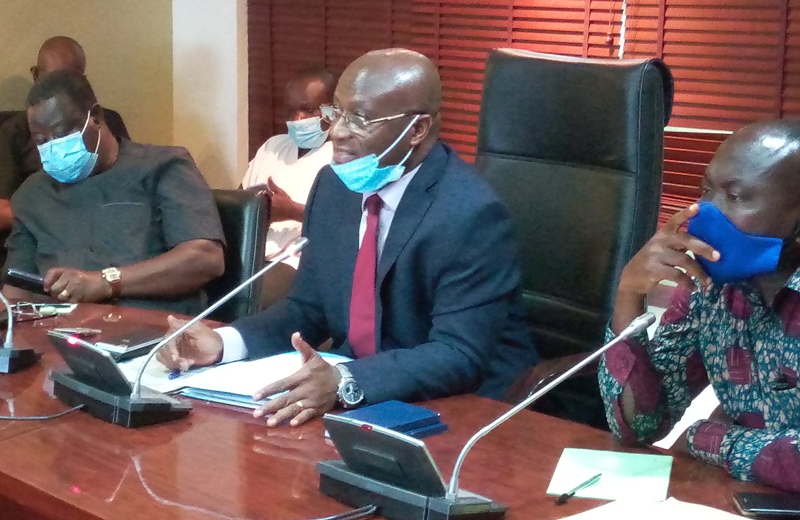
Majority leader, Osei Kyei-Mensah-Bonsu, spoke to the press in Parliament in response to claims by the Minority after the Budget Committee met the Commission, which outlined its programmes for the intended registration exercise and elections.
Minority arguments
Minority leader, Haruna Iddrisu, raised concerns that the EC plans to use the Ghana Card only for identification of citizenship and that the data on the card would not be applied in the exercise.
He argued that Jean Mensah does not understand the essence of data synchronization and data harmonization and questioned the insistence of the Commission to use the Ghana card when there is no intention for data sharing.
He raised alarm about the future of the intended exercise when data already processed and stored on the Ghana card would not play any role in the registration exercise and stressed, “I do not see cooperation and collaboration even though the Ghana card has been made an essential primary reference document.”
Majority arguments
Mr. Kyei-Mensah-Bonsu, however, indicated that the current Commissioners have saved the state millions and stressed that under Jean Mensah, the EC has secured a deal that will see it procure new enhanced registration kits for $6.1 million.
“An additional recovery centre will also be procured for $1.3 million, totalling $7.4 million as against the proposed $15 million the then service providers under the watch of Charlotte Osei were charging for the refurbishment of the old system,” he stated.
According to him, the EC in seven years paid $28 million for no work done and indicated that when the country switched to the biometric system in 2012, then Commissioner, Kwadwo Afari-Gyan, signed an agreement to service the system every year at a cost $4 million per annum.
He stated that it turns out that no servicing had been done all these years and yet from 2013 up to 2018, the nation had to pay $28 million.
He stressed that Parliament is satisfied with the explanation of the Commission and agrees with the detailed programme outlined for the compilation of the new register and the conduct of the elections.
—
Frontpageghana.com/Ghana/Uthman A. Marani